Day: October 28, 2026

Editorial: Why Community Matters

Our tiny volunteer team met last week for one of our biweekly meetings. Among other things, we discussed whether this publication should cost $2 or $3. The board voted for $3. Sorry, Dad. So there you have it. Your editorial board was unanimous. They felt this publication was worth supporting, and we hope you feel the same. Meanwhile, back at The Shirley Local ranch, I’ve been thinking about what our newspaper can bring to the community. What is a community, really? And how does a traditional local newspaper help strengthen that idea? This past weekend, I was on Martha’s Vineyard for a funeral. Funerals are, of course, for family and friends, but they are also for the broader community of people whose lives were touched by the person being remembered. The service brought together friends, family members, clients and colleagues. With a Zoom option available, more than 500 people attended. What an incredible turnout for the family. This is community. The Shirley community has always struck me, as an outsider, as a “wide spot in the road,” as my Southern grandmother used to say, if I remember the expression correctly. New England is filled with towns like Shirley, places built by proud families who value simple lives and strong connections. They are often quiet towns, but they are communities nonetheless. My team and I have been fortunate to work here, in the Phoenix Park mill, for more than 13 years. Our mill, however, is a community of its own. We drive into town, grab Dunkin’, head to work and then drive home. We don’t attend library programs, swim at the town pool or participate in every local event. But the community does. When a local newspaper covers the pool, school news, police news and even what’s happening inside this mill, it contributes to that community. It helps connect people to one another and reminds us of the things we share. In fact, the women behind this newspaper are almost all local residents. We are doing our best to contribute to the community we serve. How are we doing? Write to us and tell us.    — Tamar Russell Brown, Publisher

Veterans Day In Shirley

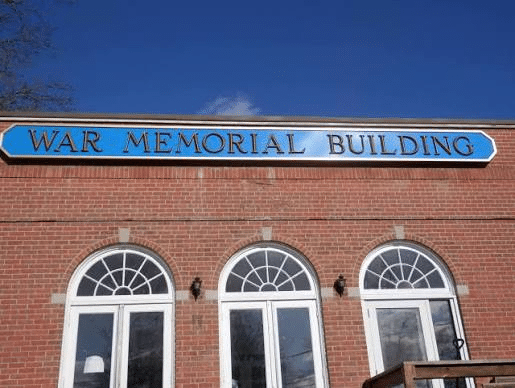
Text and photo by Meredith Marcinkewicz This month’s military commemoration was established as Armistice Day on November 11, 1919, marking one year since the WWI armistice at the 11th hour of the 11th day of the 11th month in 1918. It became a federal holiday in 1938. Following WWII and the Korean War, the focus broadened to all veterans, leading President Dwight D. Eisenhower to rename it Veterans Day in 1954. The Shirley memorial program will be held upstairs at the War Memorial Building on Church Street at 11 a.m. on Wednesday, November 11th. All will be invited to stay after the program for a lunch provided by the Shirley Veterans Events Committee. Note: The U.S. Post Office, government offices, schools, banks, and public libraries will be closed on the holiday.

UMass Memorial Health Satellite Emergency Facility at Nashoba Valley Scheduled to Open in February

Text and photo by Dina Samfield In August 2024, the closing of Nashoba Valley Medical Center in Ayer due to financial mismanagement by parent company Steward Healthcare, left area residents struggling to gain access to emergency care. Within a month of NVMC’s closure, the Governor Maura Healey Administration put together a 32-person working group tasked with addressing the healthcare needs of a region that was now left without a hospital. The group included hospital leaders, other healthcare providers, EMS and fire chiefs, community leaders, elected officials, and other state leaders. The closure hit the region particularly hard considering that specific Nashoba Valley communities face worse health disparities in chronic disease conditions, life expectancy, premature death, and social determinants of health than the rest of Massachusetts, according to Nashoba Valley Health Planning Working Group data. Additionally, since the hospital’s demise, regional emergency departments have been experiencing an increase in volume per week, leading to longer wait times for patients and increased strain on EMS systems. The good news is that the Working Group’s efforts have come to fruition in the form of UMass Memorial Medical Center at Nashoba Valley, a satellite emergency facility located at 490 Main Street in Groton. As relayed at a “Community Conversation About UMass Memorial Health Satellite Emergency Facility at Nashoba Valley” at the Prescott Community Center in Groton on the evening of October 7, the new facility is scheduled to open its doors to patients on February 1, 2027. What in the world is a Satellite Emergency Facility, and how does it differ from a hospital? A satellite emergency facility (SEF) is a freestanding emergency department that operates away from a main hospital campus under a parent hospital’s license. In answer to an audience member’s question about the SEF designation, Kathleen Hylka, Vice President for Facilities and Support Services for UMass Memorial Health, responded that the SEF designation is dependent upon Mass. Department of Public Health licensure regulations. Chief Nursing Officer for UMass Memorial Medical Center Michelle O’Rourke presented an overview of the new facility to a rapt audience of about 70 people from surrounding towns. The approximately 18,500-square-foot emergency facility, with a 15,700-square-foot medical office building, also includes some room for expansion, she said. The new facility will be equipped to handle the same urgent health concerns as a hospital’s emergency department, but will not have inpatient beds or a full hospital on-site. The SEF will be open 24/7, and include 16 emergency department treatment spaces, including nine treatment rooms, two behavioral health treatment rooms, two treatment bays, an isolation treatment room, a trauma room, and a secure holding area. There will also be four imaging treatment spaces for radiology, a CT scanner, and an ultrasound unit. CT scan, X-ray, and ultrasound imaging will be available only for emergency room patients, although UMass Memorial Health will continue to assess the community’s needs and may expand the facility’s offerings in the future, she said. This includes future consideration for magnetic resonance imaging (MRI), which the SEF does not have. Before the Q&A session, O’Rourke emphasized that the facility is still hiring a number of positions. Those interested can find openings at https://www.ummhealth.org/careers. Attentive Audience’s Questions Answered Among the many other questions asked was whether ambulances from other towns will be required to transport patients to the new facility, the concern being the amount of time ambulances in other towns must now travel to other area hospitals. Dr. John Broach, Director of Emergency Medicine of UMass Memorial Medical Group, responded that ambulances are not required to take patients to a particular destination except by EMS regulations, which is part of the set of protocols that all ambulances work through in the state. “If there are patients that this is the closest emergency facility for and that need that level of care, then that’s where they would be taken,” he said. He added that there is always the ability to respond to patient preference, and that the clinical condition of the patient also will determine where they are going with their ambulance trip. In answer to another question regarding transportation, Dr. Kevin Kotkowski, Emergency Medicine Physician for UMass Memorial Medical Group, reiterated that transportation from the SEF once a patient is stabilized will be provided to a hospital based upon patient-specific needs, and, whenever possible, a patient’s preference will be considered. With regard to the Life Flight air ambulance helipad at the facility, Dr. Broach explained that Life Flight has two bases, one in Worcester and one in Fitchburg, which service hospitals throughout New England. The expected volume of the helicopter service flying to pick patients up from the SEF is estimated to be, on average, once or twice per week, he said. As to how the Groton location was chosen, Hylka explained that the site was chosen after careful consideration of the region’s most immediate concerns, including EMS transport times and the availability of health care services. The decision was made in collaboration with the region’s fire and EMS chiefs and members of the Nashoba Valley Health Planning Working Group. Other questions concerned the SEF’s impact on noise and local traffic. Hylka said that a traffic analysis had been conducted, with considerations for both capacity and growth. This included a peer review on behalf of the Town of Groton. With the opening of the facility, a 3-4 percent increase in traffic is expected, she said. When a Groton resident expressed concern about the level of noise from ambulances, Dr. Broach explained that there is a general understanding among EMS of when sirens are needed. For more information on the new emergency facility, visit https://www.ummhealth.org/about-us/medical-center-nashoba-valley/medical-center-nashoba-valley-FAQ. A recording of the entire Oct. 7 meeting can be found at https://reflect-thegrotonchannel.cablecast.tv/internetchannel/

Meet Select Board Member Andree Lourdes Jean Jacques

Shirley resident Andree Lourdes Jean Jacques is currently serving her third term on the Select Board. Her professional background in human services has given her extensive experience working with individuals and families, connecting them with resources, navigating complex systems and advocating for their needs – skills that complement her work in public service. She is also the owner of Bless Life Services LLC and works as a mortgage signing agent, assisting with real estate closings on behalf  of mortgage and title companies. Andree is a devoted mother who values family, faith, and community involvement. Outside of her professional and civic responsibilities, she enjoys spending time with her family, participating in church and community activities, and pursuing creative and entrepreneurial projects. The Shirley Local has asked each Select Board member to answer a series of questions and will publish their answers in successive issues. We begin with Andree, who currently serves as Select Board Chair: Please tell our readers a little about yourself, including your reason(s) for wanting to serve as a Select Board member. I chose to serve on the Select Board because I believe strongly in giving back to my community. I also wanted to help represent residents whose voices may not always be heard and to be part of the work of improving Shirley for everyone. Public service gives me the opportunity to listen to residents, understand their concerns, and help make decisions that strengthen our community. What do you find special about Shirley? What I find most special about Shirley is its strong sense of community. I appreciate living in a town where people know one another, look out for their neighbors, and come together when help is needed. I also value our school system  and the important role our schools play in preparing Shirley’s children for their future. What is the most important thing you hope to accomplish as a Select Board member? One area I would especially like to see strengthened is educational and recreational opportunities for our children outside of the regular school day, including more after-school activities and summer programs. Technology is now a major part of children’s lives, and while it offers many educational benefits, not everything children encounter through technology is beneficial. I would like us to find creative ways to use technology as an educational tool while also giving our young people more opportunities to learn, socialize, participate in activities, and stay engaged in positive ways. What is the biggest challenge facing Shirley in the next 5–10 years, and what will you do to help Shirley meet that challenge? I believe one of Shirley’s biggest challenges will be balancing the need to keep taxes affordable while continuing to provide the services our residents expect. Attracting responsible business development can help strengthen our tax base and support the town’s financial future. At the same time, as Shirley grows, I believe it is important that we protect the safety, character, and small-town identity that make Shirley a special place to live. I will continue listening to residents and working with my fellow Select Board members, town staff, and the community to find that balance.